
Quick answer
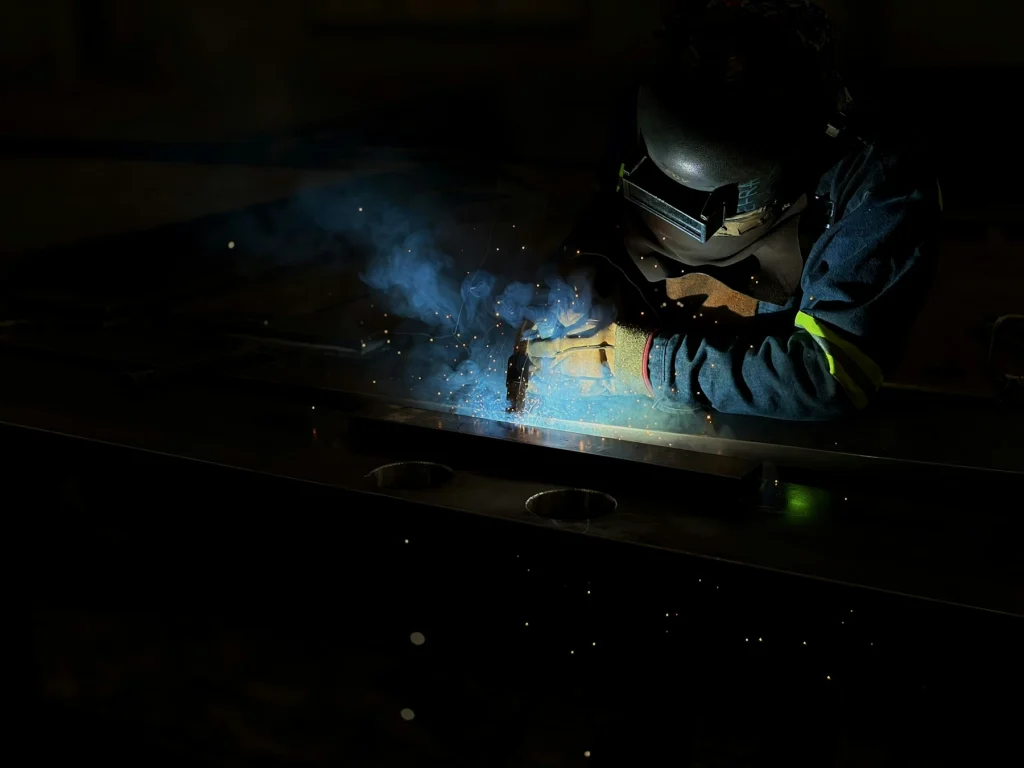
Mobile trailer repair is on-site welding for trailer frames, tongues, crossmembers, spring hangers, ramps, fenders and decks, plus truck flatbeds, headache racks and toolbox mounts. A mobile welder inspects the damage where the unit is parked, cuts out cracked or rusted steel, welds in new material, protects the truck's electronics, and coats the repair against rust.
Key points
Utility, equipment, car-hauler, dump and gooseneck trailers repaired on-site
Cracked tongues, crossmembers, spring hangers and ramp hinges rebuilt
Flatbeds, headache racks, toolbox and liftgate mounts welded on work trucks
Battery and electronics protected before any welding on a vehicle
Honest calls on rated parts such as couplers and receivers that should be replaced
Trailer and truck damage we repair where it sits
Trailers take a beating that most metal never sees: shock loads over potholes, overloaded decks, jackknife twists in tight yards and years of road spray. Trucks carrying racks, beds and toolboxes see similar vibration fatigue. The result is a short list of repairs we do again and again.
Cracks at the tongue where it meets the front crossmember
Broken or sagging crossmembers under wood or steel decks
Spring hangers and equalizer brackets torn from the frame rail
Ramp hinges, ramp springs and stake pockets broken or worn out
Fender mounts and light brackets shaken loose
Flatbed rub rails, headache racks and gooseneck plates cracked
Toolbox, ladder rack and liftgate mounting brackets fatigued
Is it safe to weld a trailer tongue or coupler?
Welding a cracked tongue or frame rail is a routine, safe repair when the crack is fully ground out, the joint is welded with full penetration, and the area is reinforced with a fish plate or gusset where the original design was marginal. The weld is often stronger than the steel around it.
Couplers, receivers, hitch balls and safety chain hooks are different. They are rated components, many are cast or heat-treated, and welding can change their strength in ways nobody can verify on-site. When one of those is cracked we replace it with a rated part and weld or bolt the new one in as the manufacturer specifies. That costs a little more than a patch and is the only safe answer for something holding a loaded trailer behind a truck.

Welding on work trucks: frames, beds and electronics
Modern trucks carry engine computers, airbag modules and body controllers that can be damaged by stray welding current. Before striking an arc on a truck we disconnect the battery, place the ground clamp right next to the weld so current does not travel through bearings or wiring, and shield nearby harnesses and fuel and brake lines from heat and spatter.
Truck frame rails deserve caution too. Many manufacturers restrict or prohibit welding on heat-treated frame rails, and drilling or welding in the wrong spot can void warranties or weaken the frame. Most of our truck work is on the bed, racks, bumpers and brackets. For frame repairs, we check the manufacturer guidance first and tell you if bolted repair or replacement is the better route.
How corrosion weakens trailer frames
Rust is the quiet half of most trailer failures. Channel and C-section frames hold mud and water along their lower flanges, wood decks stay wet against crossmembers, and boat trailers dipped in brackish water rust from the inside of every tube. In Houston that means humidity and salt; for boat trailers backed into Galveston Bay, brackish water left sitting inside every tube.
A weld laid over rust will crack again quickly, so we cut corroded sections back to clean metal and replace them with new channel, angle or tube of matching size. After welding, the repair gets a rust-inhibiting primer and topcoat, and we point out any spots where trapped water or debris is starting the next problem. Galvanized trailers get the zinc ground away before welding and a zinc-rich coating afterward.
Scheduling fleet repairs around your routes
For fleets, contractors and rental yards, the cost of a repair is mostly the downtime. We can work early, late or in batches, moving through a yard and fixing several units in one visit. Send a list with photos of each trailer or truck and we will group the work and bring the materials once.
Units that are broken on a job site or a roadside shoulder can often be made safe and roadworthy on the spot, with a full repair scheduled later if needed. When equipment on the trailer also needs work, such as a cracked loader bucket, our equipment repair service can be handled in the same trip.
How a trailer & truck repair job works with Houston Mobile Welding
01
Share photos and the VIN plate
Photos of the damage, the whole trailer or truck and the rating plate tell us the frame type, load rating and likely materials.
02
Receive the scope and price
The written quote lists what will be welded, reinforced or replaced, any rated parts we recommend swapping, and a visit time.
03
Weld at your yard or site
Electronics are protected, rust is cut out, new steel is welded in, and reinforcement is added where the original design was weak.
04
Coat and check
Repairs are primed and painted or zinc-coated, and we check lights, ramps and moving parts before handing the unit back.
What drives the cost of mobile trailer repair
No two trailer repairs cost the same, because the variables change from unit to unit. The written quote reflects how much steel is replaced, how hard it is to reach, and whether parts need to be ordered.
Access matters a lot. A crack on the top of a tongue is fast to fix; a crossmember buried under a loaded deck, or a hanger next to a fuel tank, takes more time to reach safely. Rust adds cutting time. Aluminum trailers are TIG or spool-gun welded with matched filler and take more care than steel, which our stainless and aluminum page explains.
Length and type of the crack or break, and whether reinforcement is added
Amount of corroded steel that must be cut out and replaced
Deck removal, unloading or jacking needed to reach the damage
Replacement parts: couplers, jacks, hangers, hinges, springs
Steel, galvanized or aluminum construction
A quick trailer check before you request service
A few minutes with a flashlight helps us quote accurately and helps you catch the next failure early. Photograph anything you find and include it with the quote request. Our blog has a longer pre-trip checklist for fleets. If the trailer lives outside Houston, see our service areas to confirm coverage.
Look along the tongue and front crossmember for hairline cracks in the paint
Push on spring hangers and look for rust bleeding from the weld line
Check crossmembers from underneath for bowing or broken welds
Work ramp hinges and look for oval-worn pins or cracked knuckles
Note the trailer type, GVWR from the VIN plate and where it is parked
Frequently asked questions
Can you repair my trailer where it is parked?
In most cases, yes. We need safe, level ground, room to work around the damaged area and enough clearance to get under the trailer if the damage is beneath the deck. Driveways, equipment yards, job sites and warehouse lots all work. If the trailer is loaded, it may need to be unloaded so we can reach the damage and work safely.
Do you weld aluminum trailers?
Yes. Aluminum trailers are welded with TIG or a spool gun using filler matched to the alloy, usually after thorough cleaning to remove oxide and road film. Aluminum loses some strength near any weld, so on structural cracks we often add a doubler plate or gusset. We will explain in the quote when a section is better replaced than repaired.
Will welding damage my truck's computer?
Not when it is done carefully. We disconnect the battery, clamp the ground lead as close to the weld as possible so current does not pass through modules or bearings, and keep heat and spatter away from wiring, fuel and brake lines. Some vehicles have specific manufacturer instructions for welding, and we follow those when they apply.
Can you weld my cracked coupler or hitch receiver?
We do not recommend it. Couplers, receivers, balls and safety chain hooks are rated parts, often cast or heat-treated, and welding can weaken them in ways that cannot be checked on-site. We replace them with rated components and weld or bolt the new part in properly. It is a small added cost for a part that holds the whole load.
How long does a typical trailer repair take?
A single crack or broken hanger is often repaired in a few hours, including prep and coating. Multiple crossmembers, deck removal or rust replacement along a frame rail can take most of a day. When parts need to be ordered, such as a specific coupler or axle hanger, we may make the trailer safe on the first visit and finish on a second.
Do you install hitches, gooseneck plates or headache racks?
We weld and fabricate headache racks, gooseneck plates, flatbed modifications and toolbox mounts on work trucks. For hitches and receivers we prefer rated bolt-on kits designed for the vehicle, and we will tell you when a welded install conflicts with manufacturer guidance on the frame. The goal is a setup you can tow with confidently and that passes inspection.