Quick answer
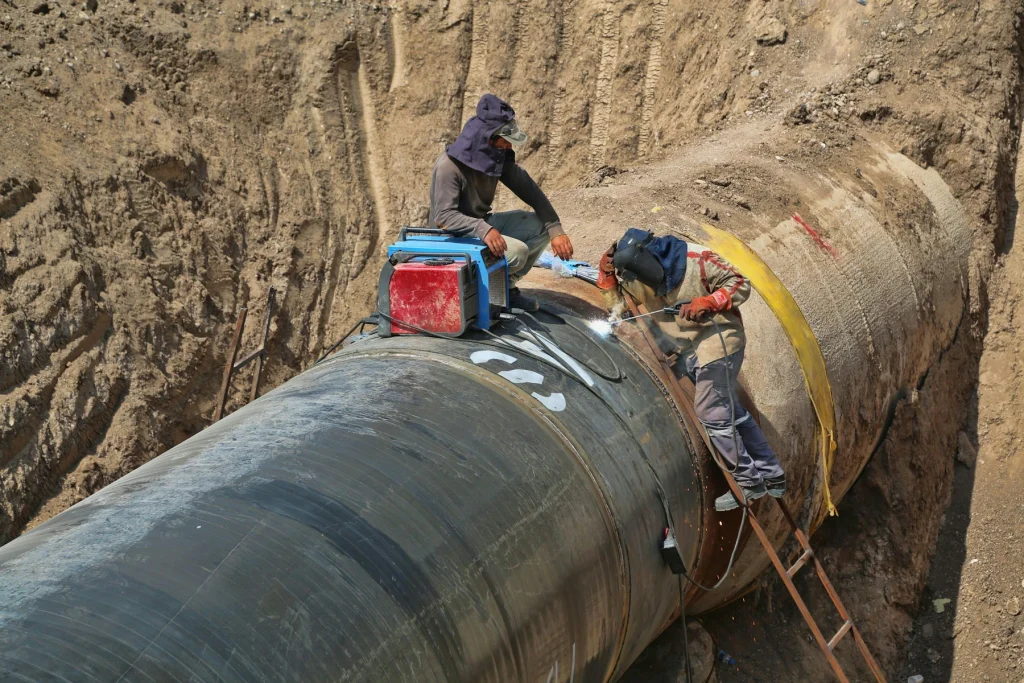
Pipe and industrial welding covers the supports, hangers, racks, guards, brackets, bollards, platforms and dock equipment that keep a facility running. A mobile crew fabricates and repairs these parts on-site using stick, flux-core, MIG or TIG, follows the plant's hot work permit and fire watch rules, and coats the work for humid or chemical environments.
Key points
Pipe supports, hangers, shoes, guides and small pipe racks fabricated and installed
Bollards, machine guards, guardrails and safety cages repaired or built
Dock plates, dock leveler lips and trailer restraint brackets welded
Work planned around shifts, shutdowns and your hot work permit process
Clear about scope: pressure piping and code-stamped work referred when it is not a fit
Light industrial welding that keeps a facility running
Maintenance welding in a shop, warehouse or small plant is rarely glamorous and almost always urgent. A broken guard can stop a line, a cracked support can stress a pipe, and a damaged dock plate can idle a loading door. The job is to fix it right without turning a two-hour repair into a two-day shutdown.
We bring the welding machines, cutting tools, material and coatings in one truck and work from your site conditions. Outdoors and in drafty buildings we favor stick or flux-core because shielding gas blows away. Indoors, for cleaner work on thin material, MIG or TIG keeps spatter and cleanup down.
Loading docks tie industrial work to fleet work. When a trailer backs into a dock plate hard enough to crack a hinge, or a truck liftgate bracket fails in the yard, our trailer and truck repair work can be folded into the same visit, so the dock and the units that use it come back into service together. One crew, one permit, one cleanup.
Pipe supports, hangers and small racks
Pipe support steel takes vibration, thermal movement and, in many Gulf Coast plants, constant humidity and chemical exposure. Over time, hanger rods corrode, trapeze angles bend, and welded shoes crack where the pipe slides across them. Left alone, a failed support moves stress into the pipe itself.
We fabricate and replace support steel to match the original or to a drawing you provide: angle and channel trapezes, pipe stanchions, base-plated posts, guides and shoes, and small pipe racks for utility lines such as compressed air, water and conduit. Where a support is being redesigned for more load, we weld to your engineer's details rather than guessing at sizes.
Where our pipe and industrial welding stops
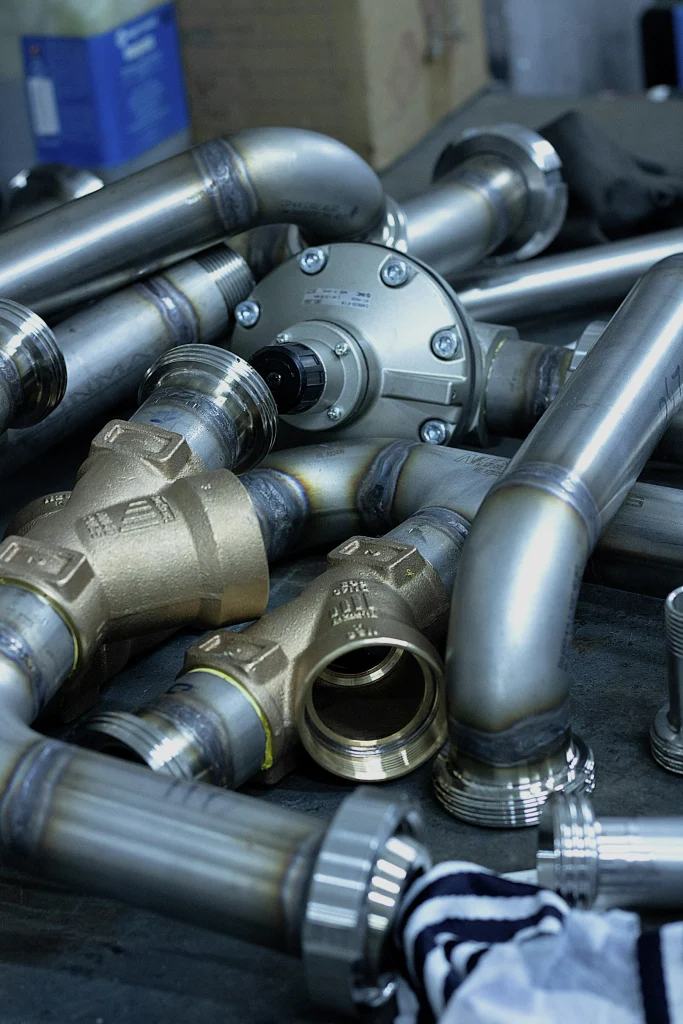
Honesty about scope saves everyone time. Welding on pressure piping, such as process lines, steam or fuel gas, is governed by codes like ASME B31.3 and B31.1, requires qualified procedures and welders, and usually involves inspection and testing. That work needs documentation that goes beyond general maintenance welding.
Our focus is the steel around and supporting the piping, along with general facility fabrication. If your job involves the pressure boundary itself, tell us in the request. We will tell you plainly whether we can provide the procedures and qualifications it requires, and if not, we would rather say so up front than have you discover it mid-project.
Working safely inside an active plant
Hot work in a running facility is a safety process as much as a welding task. Before we start, we walk the area with your contact, review the permit, and set up fire protection appropriate to the space. Your rules take priority over ours wherever they are stricter.
Hot work permits completed and posted per your site program
Combustibles moved or covered, floor drains and openings protected
Fire watch during welding and for a set period afterward
Lockout and tagout confirmed on any equipment we touch
Welding screens to protect nearby workers from arc flash
Fume control and ventilation, especially on galvanized or coated steel
Common maintenance jobs in shops and warehouses
Beyond piping, most of our industrial calls involve the steel that protects people, equipment and buildings. Many of these jobs are combined into one visit with a short punch list.
Storage racking is a special case. Damaged rack uprights and beams typically should be replaced or repaired with the rack manufacturer's approved kits rather than welded, because welding can change the rated capacity. We will flag rack damage we see and leave the repair method to the manufacturer's guidance.
Bollards and column guards straightened, replaced or newly set
Dock plates, dock leveler lips and hinge pins rebuilt
Mezzanine handrails, toe boards and ladder cages repaired
Conveyor frames, chutes and hoppers patched or reinforced
Machine guards, safety cages and equipment stands fabricated
Overhead door tracks, brackets and jamb guards repaired
How a pipe & industrial job works with Houston Mobile Welding
01
Describe the job and site rules
Send photos, sizes, drawings if any, and your safety requirements so we can plan the right process and paperwork.
02
Agree on scope and timing
The written quote covers materials, method, coatings and a work window that fits production or a planned shutdown.
03
Permit, set up and weld
We complete the permit with your team, set up fire protection and screens, then fabricate and weld on-site.
04
Coat, clean up and close out
Joints are cleaned and coated, the area is returned to normal, and the permit and fire watch are closed out with you.
Coatings for humid and chemical environments
Industrial steel in Houston faces humidity, salt air from the bay and, in some plants, chemical vapors. A bare weld in that environment begins to rust almost immediately. We clean each joint, remove slag and spatter, and apply a coating suited to the setting: rust-inhibiting primer and enamel for general use, zinc-rich coating on galvanized steel, or a primer compatible with your plant's specified paint system.
If your facility has a coating spec, send it with the request. Where steel will see washdown or food contact, stainless may be the better material, and our stainless and aluminum welding service covers that work.
What should a maintenance manager send with a request?
Good information up front means the crew arrives with the right material and the right expectations. A short email-style description in the quote form, plus photos, usually covers it. For recurring work, ask about grouping repairs into planned maintenance visits so small issues are handled before they become line stoppers.
Facilities that also need building steel work, like a new mezzanine connection or a reinforced roof opening, can combine it with our structural welding service. Locations outside Houston are listed on our service areas page.
Photos of the failure plus a wider shot showing access and surroundings
Material and approximate size, such as pipe diameter or angle size
Any drawings, specs or coating requirements
Site safety requirements, orientation and permit contacts
Preferred work windows: shifts, weekends or planned shutdowns
Frequently asked questions
Do you weld on pressure piping?
Pressure piping falls under codes such as ASME B31.3 and B31.1 and requires qualified welding procedures, qualified welders and usually inspection and testing. Our core work is the support steel and general facility fabrication around piping. If a job touches the pressure boundary, tell us in the request and we will say plainly whether we can meet the documentation it requires.
Can you work during a plant shutdown or off-hours?
Yes. Many industrial customers prefer early mornings, weekends or planned shutdowns so welding does not disrupt production or put workers near hot work. Tell us your preferred window when requesting a quote. For shutdown work with a list of tasks, sending the list ahead lets us plan materials and crew time so everything is done within the window.
Will you follow our site safety program?
Yes. We work under your hot work permit system, lockout and tagout procedures, PPE rules and any site orientation you require. Where your rules are stricter than our standard practices, yours apply. If your site needs specific documentation from contractors before they arrive, send the requirements with the quote request so we can confirm them in advance.
Can you repair damaged pallet racking?
We generally do not weld storage rack uprights or beams. Rack capacity depends on the manufacturer's design, and welding can change it in ways that are hard to verify. The usual answer is replacement parts or the manufacturer's approved repair kit. We can still handle the bollards, column guards and end-of-aisle protectors that keep racks from being hit again.
What materials do you use for industrial supports?
Most supports and guards are mild carbon steel angle, channel, tube, pipe and plate, welded with stick or wire processes and coated after. Galvanized steel is used where corrosion is severe, with the zinc removed before welding and restored after. Stainless is chosen for washdown, food and some chemical areas. We match whatever your facility already uses or specifies.
How fast can you respond to a breakdown?
We prioritize jobs that stop production, block a loading dock or create a safety hazard. Send photos, mark the request urgent and describe what is down. We will give you an honest estimate of when a crew can arrive, and where a full repair must wait for materials, we can often make the area safe and functional in the meantime.