Quick answer
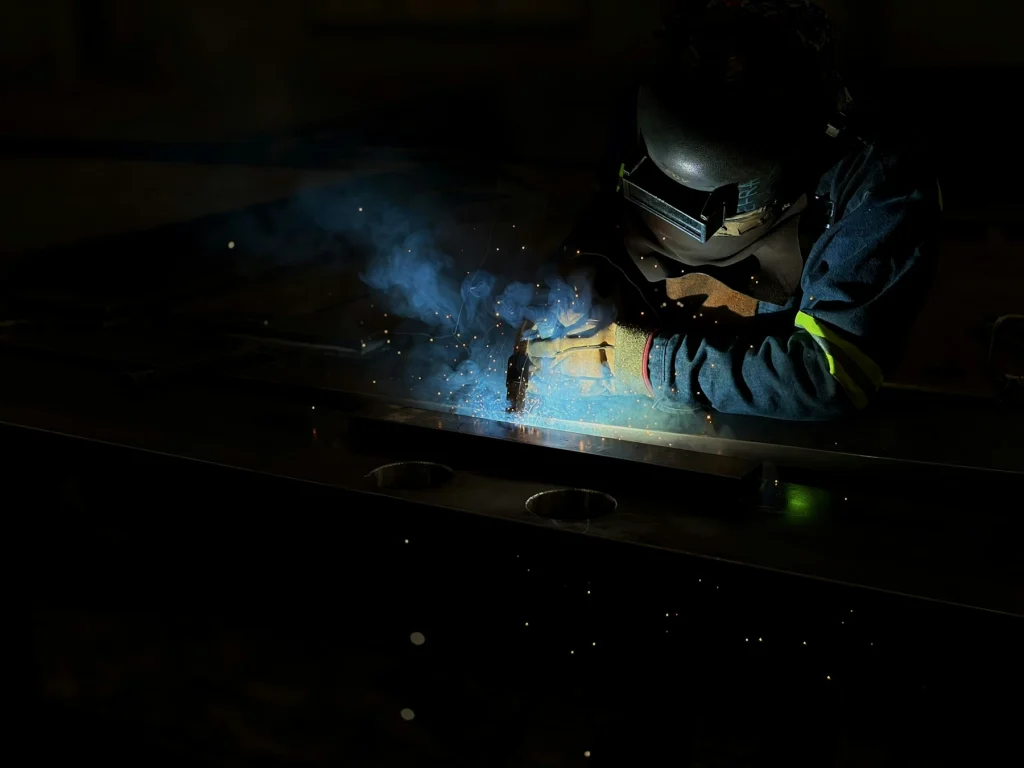
Structural welding services join and repair load-bearing steel such as beams, columns, base plates, lintels, canopy frames, mezzanines and moment or shear connections. Field welds are made to an engineer's drawings using low-hydrogen stick or flux-core processes, with preheat where thickness calls for it, and are documented for inspectors when the project or permit requires it.
Key points
Beam, column, base plate and connection welding to engineered drawings
Rusted masonry lintels, canopy frames and storefront steel repaired or replaced
Mezzanine, platform and roof opening reinforcement for light commercial buildings
Low-hydrogen processes suited to outdoor field conditions
Coordination with engineers, contractors and inspectors on permitted work
When does a repair count as structural welding?
A simple test: if the steel failing would let something fall, sag or collapse, it is structural. That includes beams and columns, but also the less obvious pieces, like the lintel over a garage opening, the frame of a fuel station canopy, the posts holding a second-floor balcony or the brackets carrying a rooftop unit.
Structural work is held to a different standard than a gate or a trailer fender. Weld size, length, process and filler are specified by an engineer, and the welding must follow them. If you are not sure whether your project is structural, describe it in the quote request and we will tell you whether an engineer should be involved first.
Residential calls are often structural too: a steel post under a second-story porch, a flitch plate or beam reinforcing a sagging floor, a steel stair stringer, or the frame of a rooftop deck. Carport posts and second-story balcony supports on older homes in salt-air suburbs like Pasadena are a classic example, where rusted steel posts and connections carry far more weight than their condition suggests.
Engineered drawings, permits and inspection
Most new structural steel and many structural repairs need stamped drawings and a building permit, and some require special inspection of the welding. Requirements differ by city, so confirm with your local building department early. In practice, structural steel welding in the United States typically follows AWS D1.1, and the drawings will reference it or a similar standard.
We weld to what the engineer specifies and do not redesign connections in the field. If something on site does not match the drawings, such as a beam that is a different size or a connection that will not fit, we stop and raise it with the engineer or contractor before continuing. That protects you, the inspector sign-off and the building.
On permitted jobs we can supply a written description of the welding performed, the process and filler used, and photos of joints taken before they are covered by fireproofing, masonry or finishes. Inspectors and engineers often arrive after steel is enclosed, and that record keeps the project from stalling while everyone tries to reconstruct what was done.
Field welding beams, columns and connections
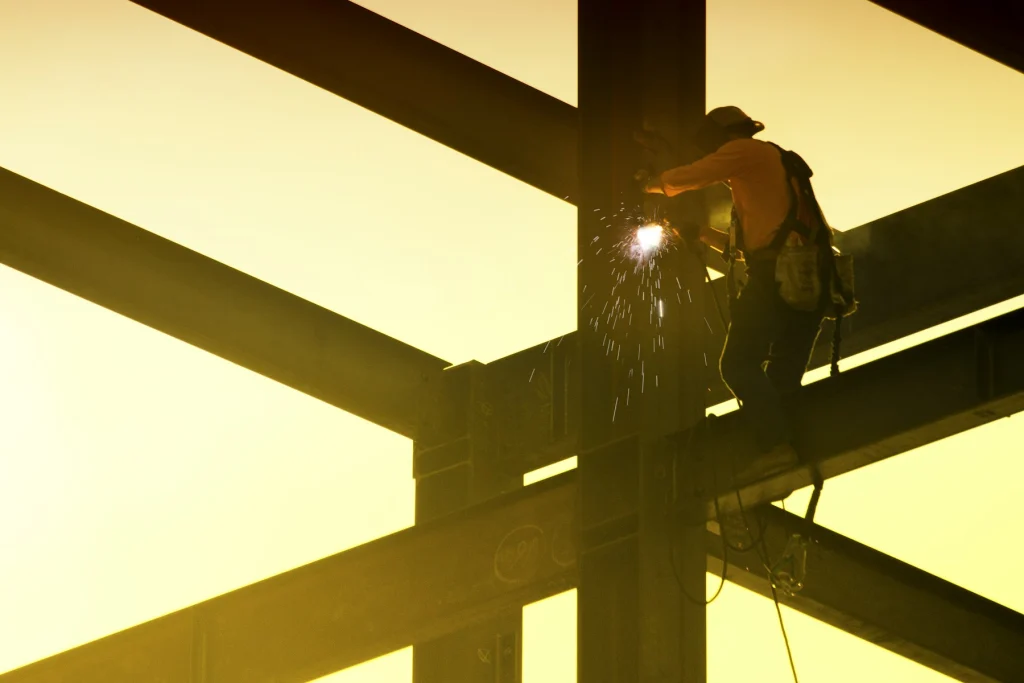
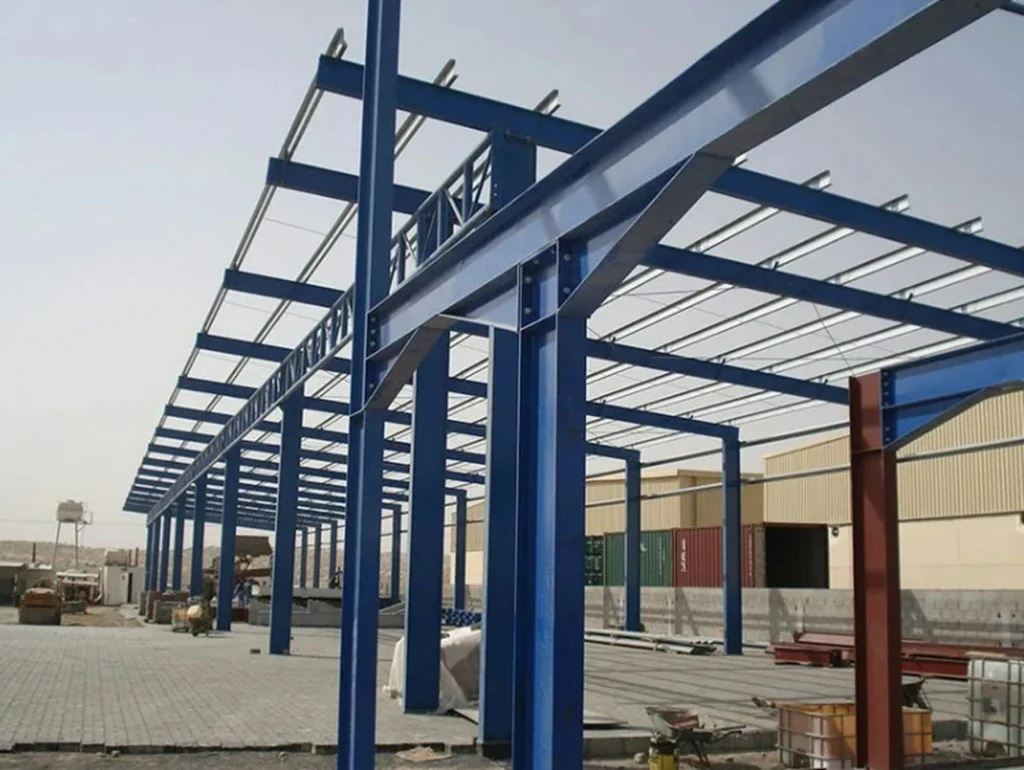
Field welding is different from shop welding. Steel may be overhead, in wind, damp or cold, and fit-up is rarely perfect. We favor low-hydrogen stick electrodes, kept dry in a rod oven, and flux-core wire for most structural field work, because both tolerate outdoor conditions and produce sound welds in heavy sections.
Thicker members may need preheat to avoid cracking, especially on cold mornings or with higher-carbon steel. Each joint is cleaned, fit and tacked, then welded in passes sized to the drawing, with slag removed between passes. Typical tasks include:
Fillet welds on clip angles, shear tabs and beam seats
Groove welds on column splices and moment connections where specified
Base plate to column welds and anchor plate repairs
Cover plates and stiffeners added to reinforce existing beams
Embed plate connections for steel to concrete
Rusted lintels, canopies and storefront steel
Some of the most common structural calls are not about big beams at all. Steel angle lintels over brick openings rust in humid climates, and as rust expands it can crack the brick above, a problem often called rust jacking. Fixing it usually means opening the masonry, removing or reinforcing the lintel, coating new steel and letting a mason close it up.
Canopies, awnings, carports and covered walkways have similar issues where columns meet the ground and where water pools at connections. We repair base plates, cut out corroded column bottoms, weld in new sections and reinforce connections, coordinating with the engineer when loads or wind design are involved. In hurricane-exposed areas, connection strength matters as much as the steel itself.
Protecting field welds on exposed steel
A field weld strips off the mill scale and any shop primer around the joint. On exposed steel, especially in humid or coastal air, that bare area becomes the first place to rust. We clean welds of slag and spatter, then apply primer compatible with the project's paint system, or zinc-rich coating on galvanized members.
For steel that will be fireproofed, painted by another trade, or enclosed in masonry, we coordinate the finish so nothing is left bare or coated with an incompatible product. If the project specification lists a coating system, send it along with the drawings.
How a structural welding job works with Houston Mobile Welding
01
Send drawings and photos
Share stamped drawings or the engineer's sketch, photos of the existing steel and the permit status so we can review scope and access.
02
Review and quote
We confirm weld types, processes, access equipment, coatings and inspection hold points in a written quote.
03
Fit, weld and document
Steel is fit and welded to the drawings, with preheat and interpass cleaning as needed, and any inspection steps scheduled.
04
Coat and hand off
Welds are cleaned and primed or zinc-coated, and we provide what the inspector or engineer needs to close out.
Structural welding costs: what moves the number
Structural jobs are quoted from drawings and photos, and the price follows the work involved rather than a per-foot rate. Coordination time with engineers, inspectors and other trades is a real part of these jobs and is included in the quote.
Number, size and type of welds specified on the drawings
Access: overhead work, lifts, scaffolding or confined spaces
Shoring or temporary support needed before cutting existing steel
Preheat, special inspection hold points or testing requirements
Masonry, drywall or roofing that must be opened and closed by others
Material supply: beams, plate, angle and anchors
What the site needs before a structural visit
Structural welding goes smoothly when the site is ready. That means drawings in hand, permits pulled where required, shoring in place if existing members will be cut, and a clear, dry work area with access for the truck and any lift. Overhead work above occupied space needs to be coordinated so the area below can be cleared.
Projects often overlap with other services. Facility owners may pair structural reinforcement with pipe and industrial welding, and homeowners replacing a rusted lintel sometimes add security bars or a new gate at the same time. Learn more about how we work on our about page, or check coverage on the service areas page.
Frequently asked questions
Do I need an engineer for structural welding?
For new structural steel, and for most repairs that change how a member carries load, yes. An engineer specifies member sizes, connections and weld details, and many building departments require stamped drawings before issuing a permit. For like-for-like repairs on simple elements, an engineer may not be required, but confirm with your local building department before work starts.
What welding standard applies to structural steel?
Structural steel welding in the United States typically follows AWS D1.1, the Structural Welding Code for steel, and project drawings usually reference it. The code covers procedures, welder qualification, workmanship and inspection. Your engineer and building department determine exactly which requirements apply to your project, including whether special inspection of field welds is needed.
Can you weld structural steel in rain or cold weather?
Welding on wet surfaces or in active rain is avoided, because moisture causes porosity and hydrogen cracking. We shelter the joint, dry the steel and, on thick sections or cold days, preheat it. Low-hydrogen electrodes stored in a rod oven help further. If conditions make a sound weld impossible, we reschedule rather than compromise the connection.
Can you repair a rusted steel lintel over a garage or window?
Yes. Lintel repair usually involves supporting the masonry above, removing brick to expose the lintel, then reinforcing or replacing the corroded steel and coating it. A mason rebuilds the brick afterward. We coordinate the steel portion and work with your mason or contractor. Lintels supporting significant loads may need an engineer's input first.
Do you supply structural steel members?
We can source common sections such as angle, channel, plate, tube and smaller beams for repairs and light commercial work, priced separately from labor in the quote. Larger projects are often better served by a steel fabricator supplying cut, drilled and primed members while we handle field welding. We are glad to work alongside your fabricator.
How long does a structural repair take?
It depends on scope and coordination. Adding stiffeners or repairing a canopy base plate may take a day. Lintel replacement involving masonry, or reinforcement requiring shoring and inspection, can span several visits around other trades. The written quote lays out the sequence and any hold points so you can plan the project timeline realistically.