Quick answer
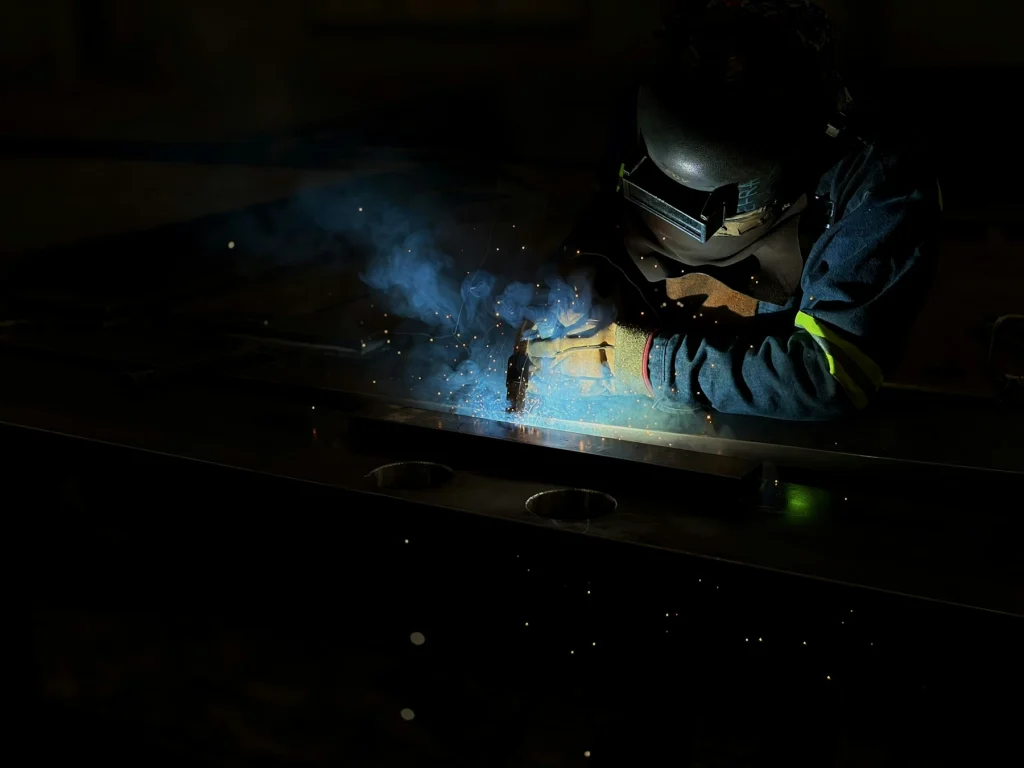
Equipment welding repair restores cracked, broken or worn steel on construction, landscaping, agricultural and shop machinery. A mobile welder repairs buckets, blades, loader arms, booms, forks, mower decks and frames on-site, hard-faces wear edges, and adds reinforcement where a design keeps cracking, while protecting hydraulics, bearings and electronics from welding heat and current.
Key points
Skid steers, excavators, backhoes, tractors, mowers and forklifts repaired on-site
Crack repair on buckets, booms, loader arms, frames and attachment plates
Hard-facing and new cutting edges on buckets, blades and grapples
Hydraulic lines, bearings and machine electronics protected during welding
Clear advice when a part needs machining or replacement instead of welding
Machines we weld back into service
If it has steel and it works for a living, we have probably welded something like it. Most calls come from contractors, landscapers, rental yards and facility maintenance teams who need a machine running again without hauling it across town on a lowboy.
Facility machinery is part of the mix too. Dock levelers, conveyor frames and hoppers usually fall under our pipe and industrial welding work, while rolling stock such as compactors, light towers and generator skids can be handled here. If a machine does not fit a category, send photos anyway; the failure matters more than the label on the hood.
Skid steers and compact track loaders: buckets, quick-attach plates, loader arms
Excavators and backhoes: buckets, teeth adapters, thumbs, stick and boom cracks
Tractors and implements: loader frames, three-point brackets, shredder decks
Commercial mowers: decks, spindle mounts, frames and trailer hitches
Forklifts and material handlers: fork carriages, overhead guards, attachments
Shop equipment: press frames, stands, carts, dust collectors and fixtures
Reading the failure: fatigue, overload or wear
Before welding anything, we look at how it broke, because the cause decides the repair. A fatigue crack grows slowly from a stress point, often at a weld toe or a sharp corner, and shows beach marks across the break. An overload failure is sudden and usually bent or torn. Wear thins steel gradually until it gives way.
Each needs a different answer. Fatigue cracks get ground out completely, sometimes with a stop hole drilled at the crack tip, and are rewelded with a smoother profile or a gusset that spreads the stress. Overload damage may need straightening and reinforcement. Wear calls for new plate or hard-facing. Welding over a crack without removing it almost guarantees it returns.
Hard-facing and rebuilding wear edges
Buckets, blades and grapples are sacrificial. Their cutting edges and side cutters wear away in sand, caliche, clay and rock, and once the base metal gets thin, the bucket starts to crack and deform. Catching wear early is far cheaper than rebuilding a bucket shell.
We replace bolt-on and weld-on cutting edges, weld new wear strips onto bucket bottoms, and apply hard-facing in patterns suited to the material: stringer beads or dot patterns that trap fines in sandy soil, and cross-hatching for rocky ground. Abrasion-resistant plate, such as AR400, is used where a full rebuild is needed, welded with procedures that respect its hardness.
Cast iron, castings and hardened steel
Not all equipment steel welds the same way. Gray cast iron housings, ductile castings, heat-treated pins and hardened wear parts each behave differently under the arc. Cast iron, for example, cracks easily from uneven heating and usually calls for preheat, nickel-based filler, short beads and slow cooling.
Some parts should not be welded at all. Heat-treated pins and bushings, many hydraulic cylinder rods, and safety-critical lifting components such as forklift forks are typically replaced instead, because welding can soften or embrittle them in ways that are not visible. When we see a part like that, the quote says so.
Protecting hydraulics, bearings and electronics
A careless weld can create a repair bill bigger than the crack. Stray welding current passing through bearings or pins can pit their surfaces, and modern machines carry controllers that do not tolerate voltage spikes. Hydraulic hoses near a weld can be cut by spatter or softened by heat.
Battery disconnected or the machine's recommended isolation procedure followed
Ground clamp placed on the part being welded, as close to the joint as possible
Hydraulic lines shielded or moved, and pressure relieved before cutting
Cylinders removed when heat could damage seals
Fuel and oil residue cleaned away and fire watch maintained
How a equipment repair job works with Houston Mobile Welding
01
Photos of the break and the machine
Send close-ups of the damage, a wider shot of the machine, its make and model, and where it is parked.
02
Diagnosis and written quote
We identify the failure type and quote the repair, reinforcement or replacement, with any parts or machining needed.
03
On-site repair
The machine is made safe, electronics and hydraulics protected, cracks removed, and new metal or hard-facing welded in.
04
Finish and return to work
Repairs are cleaned and coated, moving parts checked through their range, and the machine handed back ready to run.
Field repair versus shop rebuild, and what each costs
Most crack repairs, edge replacements and bracket rebuilds are good field jobs. They need a welder, a grinder, a torch and a solid plan. Worn pin bores that have gone oval are another matter: welding builds them up, but restoring the bore usually requires line boring equipment. We will tell you when a job needs that step and help you plan around it.
Cost is driven by access, crack length and thickness, how much new plate or edge material is required, and whether components must be removed to reach the damage. Machines that are clean, parked on firm ground and accessible take less time than ones buried in mud on a site. Trailers that haul the equipment can be repaired on the same trip through our trailer and truck repair service.
How to cut downtime between repairs
The cheapest repair is the one caught early. A quick weekly walk-around catches cracks while they are short and edges while there is still base metal to save. Pressure-wash the machine before inspecting, because mud hides cracks. Fleet owners who send photos of developing problems can often have several machines handled in one visit, which keeps costs down.
For equipment that lives near the coast or sits outdoors in humid weather, touch up chipped paint on booms and frames before rust undercuts it. Our blog covers inspection checklists, and our service areas page shows where we take on work.
Look for rust lines or cracked paint at weld toes on booms and loader arms
Check bucket bottoms and side cutters for thinning before holes appear
Listen for new knocks at pins, which often mean wear or a cracked boss
Replace cutting edges before they wear into the moldboard or bucket shell
Frequently asked questions
Can you weld a cracked excavator or skid steer bucket on-site?
Yes. Bucket cracks are among the most common field repairs. We grind the crack out fully, weld it back with the right filler and add a reinforcing plate or gusset where the bucket keeps cracking. Worn cutting edges and side cutters can be replaced in the same visit. The machine needs to be parked on firm ground with the bucket accessible.
Will welding hurt my machine's electronics?
Not when done properly. We disconnect the battery or follow the manufacturer's isolation procedure, clamp the ground directly to the part being welded so current does not pass through bearings or controllers, and keep heat away from wiring and hydraulic lines. Many machines have specific welding guidance in the service manual, and we follow it where it applies.
Can cast iron parts be welded?
Often, but with care. Cast iron cracks easily from uneven heating, so it usually needs preheat, nickel-based filler, short beads and slow cooling. Some castings are worth repairing, while others are cheaper and more reliable to replace. We look at the part, its load and its replacement cost, then give you a straight recommendation.
What is hard-facing and do I need it?
Hard-facing is a layer of very wear-resistant weld metal applied to edges and surfaces that grind against soil, rock or other abrasive material. It extends the life of buckets, blades, grapples and wear plates. If you replace cutting edges or patch bucket bottoms often, hard-facing in the right pattern for your soil can save money over time.
Can you repair forklift forks?
We do not weld forklift forks. Forks are heat-treated, rated lifting components, and welding or heating them is typically prohibited by manufacturers and safety standards. Cracked or bent forks should be removed from service and replaced. We can repair carriages, overhead guards, attachments and other forklift steel that is not a rated lifting part.
Do you work on landscaping and lawn equipment?
Yes. Commercial mower decks, spindle mounts, frames, trailer hitches, debris loaders and spreader brackets are regular jobs. Mower decks often rust through along the back edge where wet clippings collect; we cut out the damaged steel, weld in new plate and coat it. Grouping several mowers into one visit helps keep the cost per machine down.