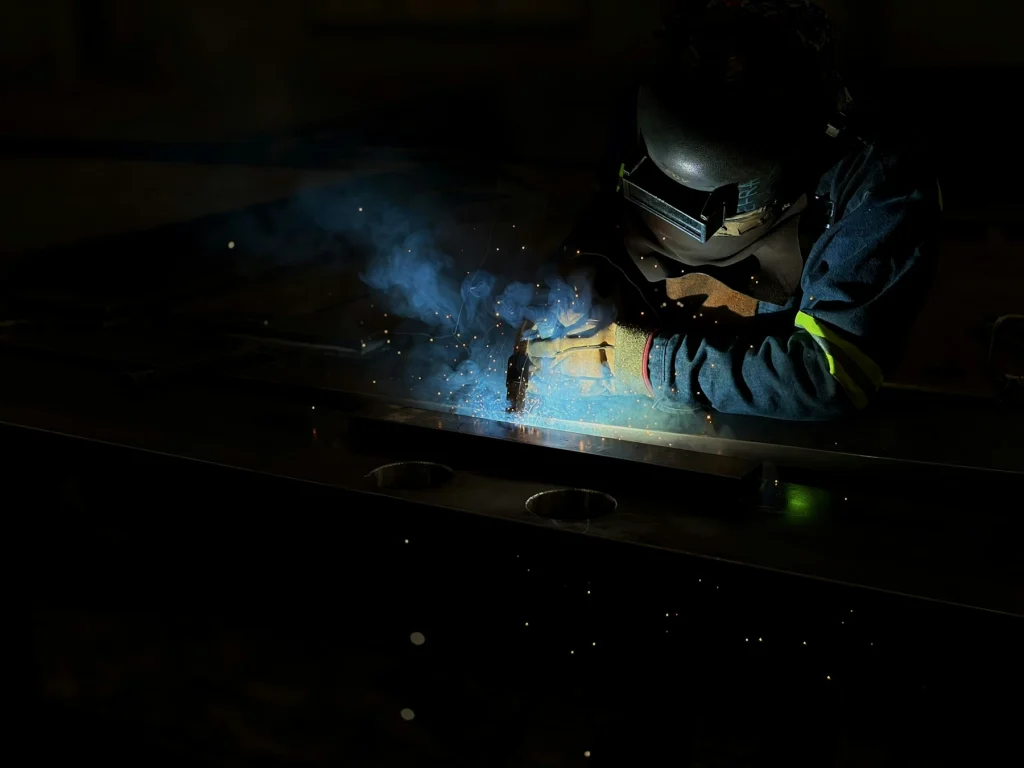

Hurricane season prep for welded steel means three jobs done before June: install or service storm shutters and their mounting hardware, reinforce gates, hinges and latches so they cannot become projectiles, and inspect welded brackets, carport frame and awning for rust and cracked welds. Tested shutter products protect openings; welding makes the anchors and steel around them dependable.
Atlantic hurricane season runs from June 1 through November 30, and the Houston area has seen how much damage wind, rain and flying debris can do. Most homeowners and business owners know to stock water and batteries. Fewer think about the steel around their property until a gate is lying in the street or a carport frame has folded over a vehicle. This guide covers what welding can and cannot do for storm protection, how to reinforce gates and storm hardware, and a timeline that keeps the work out of the last-minute rush.
Key takeaways
- Storm shutters sold for wind-borne debris protection are tested as complete systems; field-built shutters generally do not carry those ratings, so welding is best used for mounting and support hardware.
- Gates, carports, awnings and loose steel become dangerous projectiles in high winds, so hinges, latches, posts and anchors deserve reinforcement.
- Rust and cracked welds are where storm hardware fails, so inspection and repair belong early in the season.
- Properties in the Texas windstorm-designated coastal area may need inspected, certified work for insurance purposes.
- Scheduling welding in spring avoids the backlog that builds when a storm enters the Gulf.
Can a welder build hurricane shutters?
This is the most common question we get each spring, and the honest answer matters. A welder can fabricate steel panels, frames and brackets, and many older Houston homes have shop-built shutters. However, shutters marketed for hurricane protection are typically tested as complete systems to impact and pressure standards, such as ASTM E1886 and E1996, the Miami-Dade protocols or Texas Department of Insurance product evaluations. The test covers the panel, the fasteners, the anchors and the spacing as one assembly.
A custom welded shutter, no matter how sturdy it looks, usually has no such rating. That matters for two reasons. First, untested panels may fail in ways that are hard to predict, such as tearing at anchors or deflecting into the glass. Second, insurers and building officials in many areas look for tested products when evaluating windstorm protection.
Where welding fits best
Welding is valuable for the hardware that makes rated shutters work on a real building: steel headers and sill angles where the original structure is weak, mounting brackets on irregular openings, support frames for accordion or rolling shutters, and custom brackets that adapt rated panels to commercial storefronts. Rated products should be installed according to the manufacturer’s instructions, and any custom mounting should be reviewed against those instructions or by an engineer. Confirm requirements with your local building department and your insurer before you build.
Existing shop-built shutters
If your home already has older welded steel shutters, they are not automatically useless. Check them for rust at hinges and anchors, cracked welds and missing fasteners, and have damaged parts repaired before the season. Just be realistic about what they are: sturdy covers without a tested rating. When the time comes to replace them, a tested product with solid mounting hardware is usually the better investment.
Which shutter types work with welded mounting hardware?
Storm panels
Corrugated steel or aluminum panels slide into tracks above and below the opening and bolt in place. They are among the most affordable tested options. Welded steel angle or channel can provide a solid mounting surface where brick, stucco or old framing will not hold the manufacturer’s anchors reliably.
Accordion shutters
Accordion shutters fold to the side of the opening and close across it quickly. They need rigid top and bottom tracks, and wide openings on commercial buildings sometimes call for welded support frames.
Rolling shutters
Rolling shutters retract into a housing above the window or door. They are convenient but heavy, and the housing and side rails need solid structure. Welded steel headers can support them on storefronts and wide openings.
Colonial and Bahama shutters
These permanently mounted, hinged shutters combine looks and protection. Their hinges and latches are high-stress points that benefit from careful inspection and, where the product allows, reinforcement.
How do you reinforce a gate for hurricane winds?
Driveway and entry gates act like sails. A solid privacy gate catches enormous wind force, and that force concentrates on hinges, latches and posts. When a gate fails, it can flatten a fence line, damage cars or fly into the street.
Hinges and hinge plates
Many gate failures begin at hinges that were tack-welded or bolted to thin tube. Upgrading to heavy-duty weld-on or bolt-through hinges with full welds, and backing them with plates that spread the load, makes a large difference. Rust at hinge welds is especially common in the Houston climate; our guide on protecting welded steel from Gulf Coast rust covers prevention.
Latches, drop rods and center stops
A gate that is only held by its operator arm or a light latch can flap open in a storm. Drop rods, also called cane bolts, pin the gate into a sleeve in the driveway. Center stops on double gates and heavy-duty latches keep both leaves locked together. These are inexpensive additions that a welder can fit to most existing gates.
Posts and footings
The best gate in the world cannot outlast a weak post. Steel posts set in shallow concrete, or posts rusted at grade, can lever out of the ground. Reinforcing may mean larger posts, deeper footings, welded base plates or diagonal braces, depending on the gate size and soil.
Slide gates
Slide gates need secure guide rollers and catch posts, and the track should be clear of debris. A slide gate that jumps its track in high wind can be very difficult to secure. Locking it into its catch post before a storm helps.
Automatic operators
Before a storm, many owners disconnect automatic gate operators and lock gates manually so the motor is not damaged by flooding or power surges, and so the gate is held by mechanical hardware instead of the operator arm. Check your operator’s manual for guidance. Our gates and security bars service handles hinge upgrades, drop rods and post repairs on swing and slide gates.
Other steel to check before storm season
Gates and shutters get the attention, but other welded steel around homes and businesses can cause serious damage in high winds.
- Carports and patio covers: check column base plates, anchors and the welds where beams meet columns. Lightweight carports may need tie-downs or added bracing.
- Awnings and canopies: commercial awning frames can tear loose and peel fabric or metal into the wind. Check wall anchors and frame welds.
- Signs and sign frames: business sign posts and brackets catch a lot of wind; cracked welds or rusted bases are warning signs.
- Railings and balcony steel: loose railings can detach under wind and debris impacts.
- Equipment stands and rooftop supports: air conditioning stands and rooftop equipment frames should be anchored and inspected.
- Trailers and loose equipment: secure or relocate trailers and repair broken tie-down points before you need them.
For larger structures such as commercial canopies, columns and beams, our structural welding service can assess and reinforce frames. Major structural changes may require engineering review.
What does storm reinforcement cost?
We do not publish price lists, because storm prep ranges from adding a pair of drop rods to fabricating support frames for a row of storefront shutters. The cost drivers are consistent, and knowing them helps you plan a budget and prioritize.
- Scope: a single gate upgrade is a short visit, while reinforcing gates, carports and shutter mounts across a property takes longer.
- Condition of existing steel: rusted hinges, posts and brackets must be cut out and replaced before reinforcement can begin.
- Materials: heavier hinges, thicker posts, galvanized parts and stainless fasteners cost more but last longer in coastal air.
- Wall and footing conditions: anchoring into brick, block or new concrete footings adds labor compared with bolting to existing steel.
- Timing: spring scheduling avoids the crunch that builds when a storm enters the Gulf, when time and materials are both in short supply.
A practical way to stretch a budget is to tackle the items that could cause the most damage first, such as large swing gates, loose carport frames and awning anchors, then work down the list. Your written quote can be split into phases if that helps.
What about windstorm certification in Texas?
Properties in the Texas Windstorm Insurance Association designated catastrophe area, which covers the first tier of coastal counties and parts of Harris County, typically need windstorm-related construction and repairs inspected and certified to qualify for TWIA coverage. The Texas Department of Insurance administers that program. If your property sits in or near the designated area, check with TDI, TWIA and your insurance agent before starting work on shutters, roofs or other wind-resistance improvements, and make sure your installer and any required inspections are lined up. Requirements change, so confirm the current rules rather than relying on what a neighbor did years ago.
Commercial owners should also review lease terms and building management requirements before adding shutters or reinforcement, since landlords and associations often control exterior changes. Keeping dated photos and invoices for completed storm work is useful for insurance conversations, whatever program your property falls under.
A hurricane season prep timeline for welded steel
Last-minute welding is hard to get once a storm is in the forecast, because everyone calls at once and materials run short. A simple timeline helps.
Early spring
- Walk the property and photograph gates, shutters, carports, awnings, railings and brackets.
- Look for rust, cracked welds, loose anchors and missing hardware.
- Request quotes for repairs and upgrades while schedules are open.
Late spring, before June
- Complete welding repairs, hinge upgrades, drop rods and post reinforcement.
- Install or service shutter tracks and mounting hardware.
- Test-fit storm panels and label them by opening so installation goes quickly.
- Prime and paint fresh welds so they do not rust before the season starts.
When a storm is forecast
- Install shutters and panels according to the manufacturer’s instructions.
- Lock gates with drop rods and center stops, and disconnect operators if your manual recommends it.
- Secure or move trailers, equipment and loose items.
After the storm
- Stay clear of damaged steel and downed lines.
- Photograph damage for insurance before repairs begin.
- Prioritize security and safety repairs, then schedule the rest. Our guide on what to do before the welder arrives covers the first steps.
Hurricane season steel checklist
- Confirm shutters for each opening and whether they are tested products.
- Check shutter tracks, anchors and mounting brackets for rust and looseness.
- Inspect gate hinges, hinge welds, latches and posts.
- Add drop rods and center stops to swing gates that lack them.
- Check carport, awning and patio cover base plates, anchors and welds.
- Inspect sign posts, railings and equipment stands.
- Repair rust and cracked welds, then prime and paint.
- Check with TDI and your insurer if you are in the windstorm-designated area.
- Schedule work early in spring and keep photos of completed repairs.
Frequently asked questions
Are custom welded steel shutters as good as store-bought hurricane shutters?
Not necessarily. Rated hurricane shutters are tested as complete systems for impact and pressure, while custom welded panels typically have no rating. They may look heavy, but anchors, fasteners and spacing affect performance. Using tested shutters and having a welder build sound mounting hardware is usually the better approach. Confirm with your insurer and building department.
How do I keep my driveway gate from blowing open in a hurricane?
Add drop rods that pin each leaf into sleeves in the driveway, a center stop for double gates and a heavy-duty latch. Make sure hinges and posts are solid and free of rust. Disconnecting an automatic operator and locking the gate manually can also help, depending on the operator’s instructions.
When should I schedule hurricane prep welding?
Early to late spring is ideal, before the season starts on June 1. Waiting until a storm is in the Gulf means competing with everyone else for limited time and materials. Spring scheduling also leaves time for paint to cure on fresh welds before the wettest months.
Do I need windstorm certification for gate or shutter work?
It depends on your location and the work. Properties in the TWIA designated area typically need certain windstorm-related work inspected and certified for coverage. Gate repairs may not fall under that program, while shutters and openings often do. Check with the Texas Department of Insurance, TWIA and your agent before starting.
Can you repair storm-damaged gates and carports after a hurricane?
Yes. We repair twisted gates, broken hinges, damaged posts, bent carport frames and loose awning brackets across the region, including flood-prone neighborhoods in Pearland. After a major storm, demand is high, so send photos early and we will prioritize safety and security repairs.
Storm prep is easier in April than in August, and steel that is inspected, repaired and reinforced ahead of time has a far better chance of riding out high winds. Send photos of your gates, shutter mounts, carports and other steel through our Get a Quote form. We will reply with a free written quote that lays out the repairs and reinforcements that make sense for your property before the next storm.